
- Home
- blog
- tony recommends
- The Burgundy of the Mediterranean
Last Night's Wine
The Burgundy of the Mediterranean
Published: June 02, 2025
Tony Laithwaite
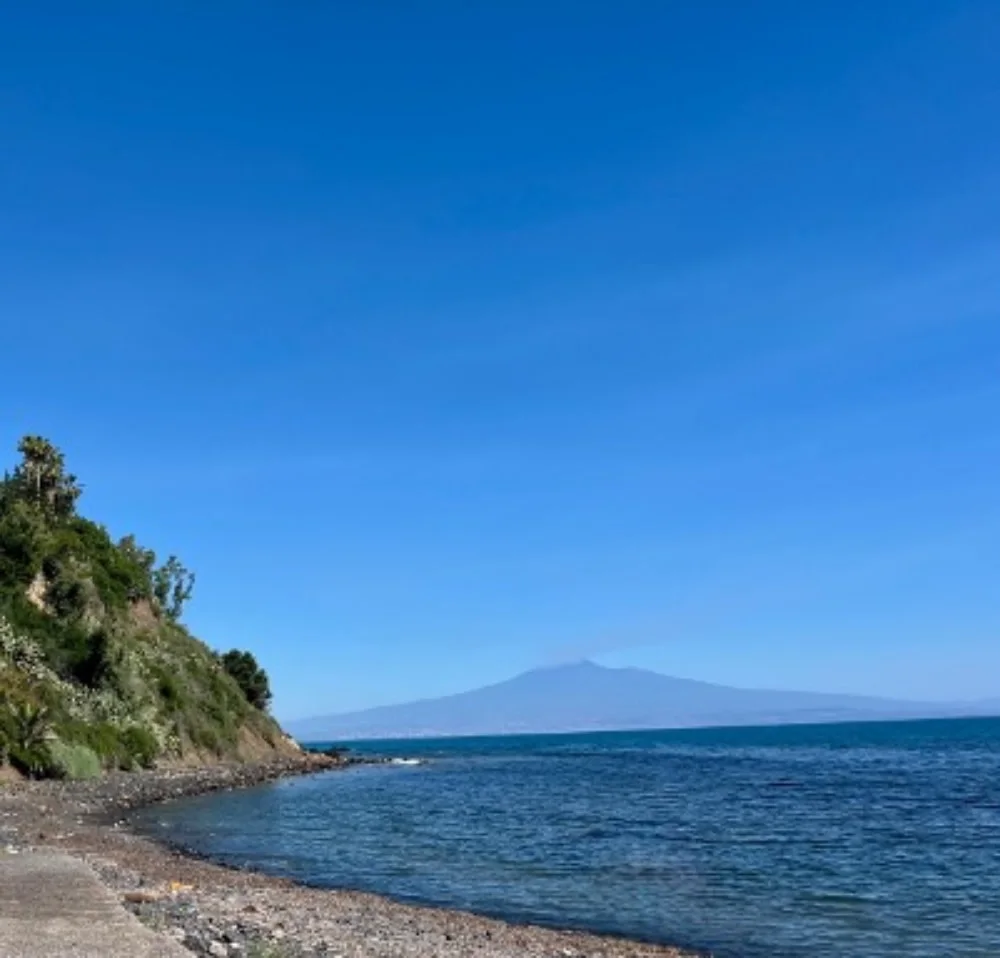
We went up the slopes of gently smoking Mount Etna to visit some unique, classy and very ancient vineyards. Today, on 2nd June… BOOM! We didn’t realise the danger.
The very Ancient Greeks first recognised the potential of Etna’s strange volcanic soil. Then so did the Carthaginians, Romans, Vandals, Ostrogoths, Byzantines, Arabs, Normans, Hohenstaufens, Angevins, Aragonese, Spanish Habsburgs, Savoyards, Austrian Habsburgs, Bourbons, the Kings of Italy,Garibaldi and his Italian Republic, Americans and Brits in the war … and now Easyjet. Never a moment’s peace here.
Despite the chaos and the exploding mountain, Etna wines became quite sophisticated and widely traded. Twenty or so years ago some adventurous (mad) winemakers proved the mountain’s classy wine potential once again. Big money and big names moved in. As they always do.
So did an old friend of ours. Not rich, not famous but a guy determined to do wine properly on his native island, to respect its traditions and protect the unique ecology.
Etna has been called ‘The Burgundy of the Mediterranean’. Normally you think for wines of refined elegance you must head to the cool northern vineyards. Here, instead, you just head up the winding roads. After all, if Etna isn't the tallest mountain in southern Europe it soon will be… because it’s growing. This altitude gives it a cool climate but with the bonus of much more useful sunshine than up north. Nonetheless harvest still take place as late as November.
But it’s not a big region; in other parts of Italy you find individual estates that are bigger than all Etna DOC. Principally it grows Nerello Mascalesea Red grape, often compared to Nebbiolo or Pinot Noir for its structure and aging potential. For white wine it’s mostly Carricante a white grape known for crisp, mineral-driven wines with great longevity.
Back to our old friend. We’ve known Philipo Mangione for years. You may even have met him yourself at one of our shows where for several years he presented other people’s wines. Then one day, as you do, he dropped everything to go back to his native Sicily and make his own. He had just enough money to buy La Vuciata – a small, rundown ‘Palmento’ (a word that charmingly means both ‘farm’ and ‘large, shallow vat used for crushing grapes and fermenting must’) on the prime northern slopes of Mount Etna; just a few scrappy hectares of veryancient vineyards.
The estate had operated successfully from 1882 till the 1980’s when a lava flow knocked out a load of vineyards and much of the rest was semi-abandoned.
This was not actually a bad thing as it meant that the old vines were kept, not replaced. The conditions on Etna are amazingly healthy for vines. They almost never get diseased and live long. We’ve just visited some huge vines that could be 150 years old. Some are unknown varietals even to the pros at Davis University in California – the world’s prime source of grape varietal information. If it’s a vine, they’ll know it’s family ancestry. They came and sampled Phillipo’s vines and several were a total mystery to them.
Volcanic soil is rich in essential minerals and has excellent drainage, which forces vines to grow deep roots, resulting in small, concentrated grapes with intense flavours. The unique terroir imparts distinctive smoky, mineral, and sometimes salty notes to the wines, because each lava flow brings up different combinations of minerals.
It’s just a bit bloody dangerous because Etna never stops erupting. There have now been three so far this year. Quite a few last year. Here they get dust and stones falling like we get rain. Lava flows did engulf a nearby village. So you have to admire the bloody-minded tenacity of growers here. None more so than Phillipo.
To finance his vineyard he also holds down a job for one of Sicily’s big cooperatives. But it’s at the other end of the island meaning long drives through the night along Sicily’s terrible roads.
I do always prefer buying wine from people who work hands-on and hard. Phillipo has personally revived his vineyards and rebuilt his cellars. He has three lads who work with him but during Covid lockdown he was on his own. I really don’t know how he coped. He even cut down chestnut trees and had them made into beautiful great casks by the last remaining cooper on the island.
Against all the odds, Phillipo has grown his little farm. As the region became more famous prices rose and now attain something over €30,000 a hectare which is about the price of a Grand Cru Classé vineyard in Saint Emilion. He can’t afford that. But being a hands-on wine grower with a great ability to make friends he has managed to acquire several tiny vineyards that are not financially viable for the big boys. He now has 13 hectares … spread over 17 separate sites. All organic. All farmed sustainably. This includes one that’s over 3000 feet up. A white wine vineyard. Possibly a record. Back down on the coast the family and I are all agreed it’s Phillipo’s Armagia white Carricante we love best. Barbara and I are celebrating our Golden Wedding here with ALL our offspring. It’s hot in Sicily in May and Armagia is divine with the copious plates of local seafood. Those Greeks knew what they were doing.
Plato is often quoted as saying “The Sicilians build like they will live forever and eat like they will die tomorrow.” Apparently he never actually wrote that. But he should’ve.
About the author
Tony Laithwaite
Founder of Laithwaites in 1969 and co-founder of The Sunday Times Wine Club in 1973, Tony Laithwaite has, during his nearly 60-year career, led the way in many fields. He has discovered new wine regions, founded the ‘Flying Winemaker’ movement, been the first or one of the first to import wines from Bulgaria, Moldova, Australia, New Zealand, Czech Republic – the list is long.
From the start, Tony has wanted his customers to share the magic of wine. He’s achieved that largely through the written word, the stories - and occasionally at wine shows. He regards as one of his greatest achievements the championing of Castillon Côtes de Bordeaux by buying his own château… proving its wines to be at least equal to Saint-Émilion Grands Crus Classés next door.
We stop at nothing to bring you great wine
For over 50 years, we've gone off the beaten track to bring you great bottles from independent wineries around the world. We taste over 40,000 bottles a year to find the 800 or so that make the final cut. Juicy reds, refreshing whites, tasty rosés, thrilling fizz - you'll find all sorts of hidden gems in our handpicked wine collection.