How to read a wine label
Decoding a wine label can often feel like learning a second language. Half the time the grape isn't written on the bottle – only the location. What exactly is sur lie? And how do AOC, DOC and IGT differ?
There’s a lot to take in - but when you know the key details to look out for, it becomes a lot easier to find something you'll love.
To help you understand any bottle at a glance, we’ve put together a cheat sheet of the most common expressions you’ll encounter in the wine world.
The Five “Pillars” of a Wine Label
While every bottle is unique, almost all wine labels are built around these five key pieces of information to tell you what’s inside.
1. Producer or brand name
This could either be a household name or something that carries a lot of clout - it usually sits at the top of the label so is likely to be the first thing you see.
2. Vintage
The vintage is always the year the grapes were harvested, not the year the wine was released. This can help you determine the quality of the wine depending on whether a particular region had a good or bad year.
The vintage will also tell you how old the wine is - for example, a Gran Reserva Rioja must be aged for a minimum of five years before release.
3. Wine name
This is fairly self-explanatory. However, many Old World wines will instead choose to list the area in which the grapes were grown (e.g. Chablis or Sancerre).
4. Geographical Indicator (GI)
Almost all wines will make it clear on the label where the grapes were grown, but European winemakers must follow a strict set of rules if they do this.
For example, if winemakers in the Saint-Émilion appellation of Bordeaux want to put Saint-Émilion AOC on their label, they can only use Merlot, Cabernet Franc and Cabernet Sauvignon.
Because of these regulations, the GI should give you a good idea of how the wine should taste.
5. Grape variety
If you're someone who knows what they like and likes what they know, then chances are this is the piece of information you'll find most useful. Unfortunately, many European producers won't list them and display their GI instead.
These means you need to research which areas make the style you like. If you love Sauvignon Blanc then look out for Sancerre and Touraine, or if you're a Nebbiolo fan then opt for Barolo or Barbaresco.
wine label “buzzwords” to look for
Beyond the basics, you’ll often find other technical terms that offer a deeper look into how the wine was crafted, and what to expect inside the bottle.
Sur Lie – meaning aged "on the lees," which adds a creamy texture and flavours of toasted bread or brioche.
Vieilles Vignes - "Old Vines”, usually referring to vines over 35–50 years old. These wines are usually more intense and complex.
Estate Bottled – Meaning the wine was grown and bottled on the same property, potentially indicating higher quality control.
Brut - The standard term for dry sparkling wine.
Reserva / Riserva - Indicates the wine has been aged longer than standard (often in oak).
Cuvée – A “special blend,” usually the producer’s premium or signature selection.
Sulphites - a natural byproduct of fermentation that plays a crucial role in maintaining a wine’s freshness and flavour.
Alcohol by Volume (ABV) - This is more than just a "strength" indicator – this can tell you something about the body and style of the wine. Lower alcohol wines (under 11%) are likely lighter-bodied, higher acidity, or potentially sweet. Full alcohol wines (over 14%) are likely full-bodied, rich and from a warm climate.
Wine Labels: A Visual Breakdown

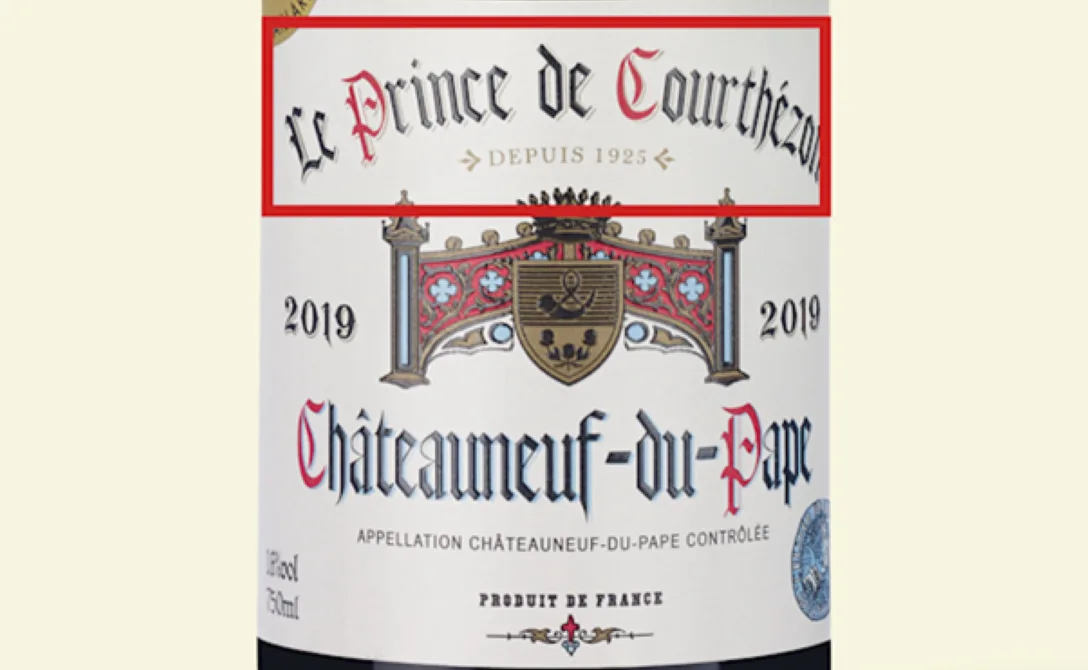
Producer name
This one is quite clear, Le Prince de Courthézon is the name of the producer of the wine. You're likely to find several wines under this name. In our range, you will find a Châteauneuf-du-Pape and a Côtes du Rhône.
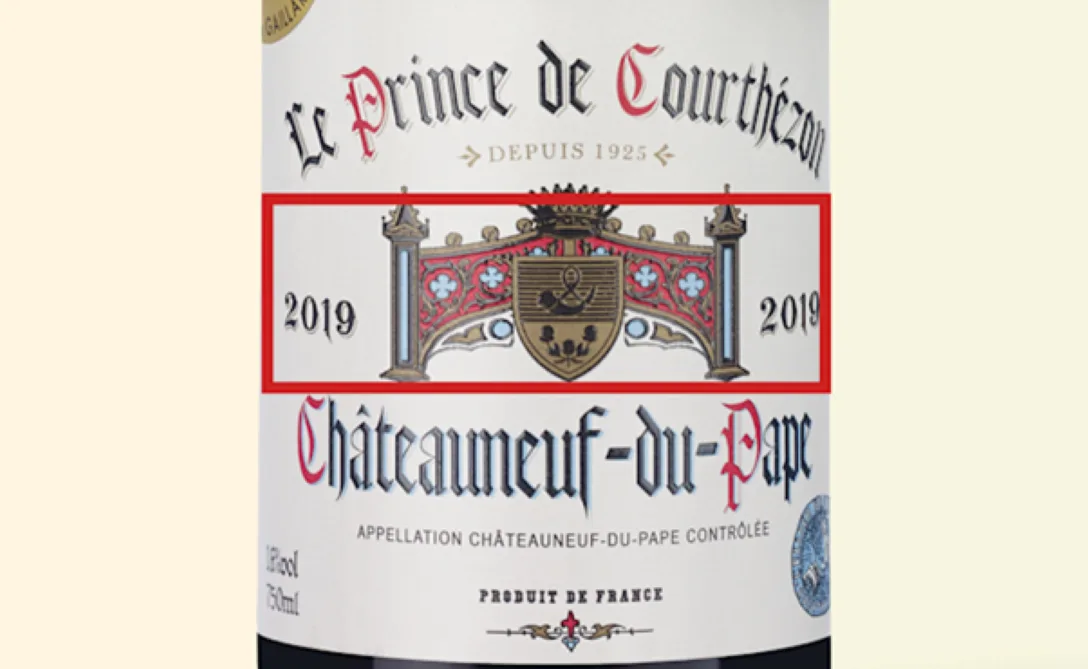
Vintage
2019 was thought to be a good vintage for Chateauneuf-du-Pape. Good quality wines usually benefit from bottle ageing and are generally released when winemakers feel they are ready to drink .
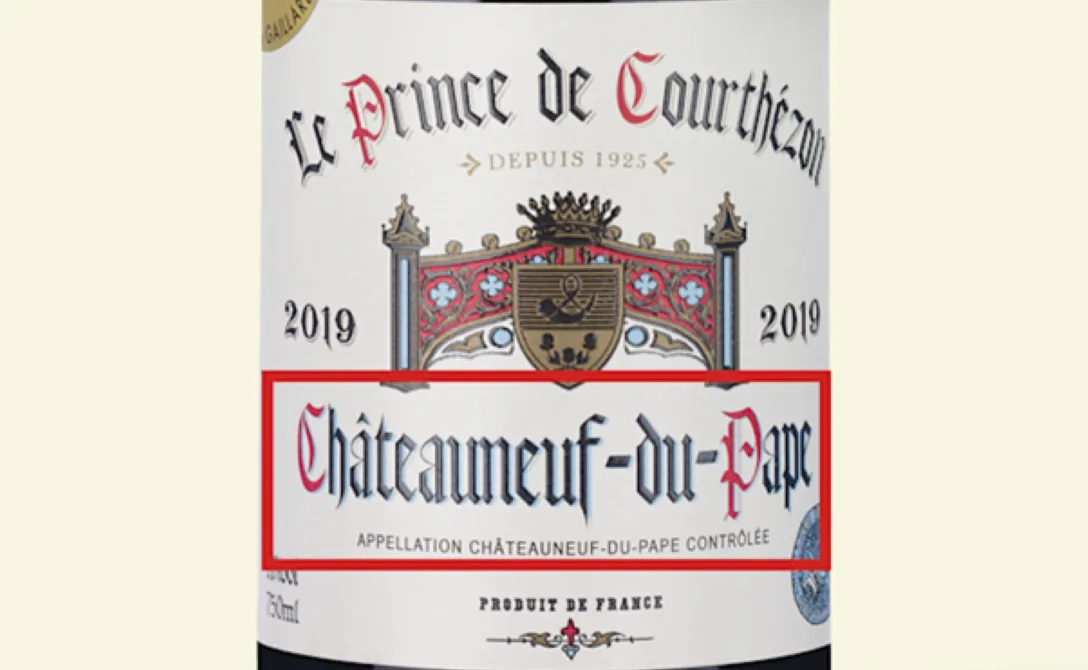
Geographical Indicator
This wine is labelled Appellation Châteauneuf-du-Pape Controlée and is likely to include a blend of Grenache, Syrah and Mourvèdre. Based in France's Southern Rhône, the region has has a warm climate and stony soils which help to create wines with intense red fruit flavours.
We stop at nothing to bring you great wine
For over 50 years, we've gone off the beaten track to bring you great bottles from independent wineries around the world. We taste over 40,000 bottles a year to find the 800 or so that make the final cut. Juicy reds, refreshing whites, tasty rosés, thrilling fizz - you'll find all sorts of hidden gems in our handpicked wine collection.
About the author
Brogan Wilson
Qualified to WSET Level 2 Wine, Brogan is a relatively new member of the team, having joined in September 2023. She previously worked as the sole copywriter at a creative marketing agency, and before that, as a primary school teacher. At Laithwaites HQ, you’ll find her growing her knowledge, asking lots of questions, and crafting both digital and print copy. An ardent red wine drinker, Brogan is also fond of Crémant.