Latest News
Latest News
May 2018
Latest news from Château La Clarière
As I have said before, there’s never been a better time to be a Confrère ... first, there was the release of 2015 and, now, hot on its heels is the 2016 and that vintage is taking even more glory than its predecessor.
Your reserved allocation of 2016:
Your Château La Clarière 2016 has just been released onto the so-called show circuit and has already scored three Golds – one in China, one in Lyon and the third in Paris. I’m sure there’ll be plenty more, too. The 2015, by the way, has won its 8th Gold, alongside its Trophy as Best French Red. It’s amazing how similar this 2015/2016 duo of vintages is to 2009/2010 – the first in each pair very showy and appealing from early on, while the 2010/2016 are both more reserved and classic, only slowly willing to reveal all their glory. So, you’ll need to be a tiny bit more patient ...
Generous words from the press:
There is an ocean of praise for the 2016 vintage ... and rightly so. This is the pick of the enthusiastic notes from the top critics: “an exceptional vintage in 2016 ... compelling wines on both Left and Right banks”, “The 2016s are absolutely remarkable wines” (Vinous), “Without doubt an exceptional year ... the best are up with the greatest ever produced.” (Decanter), “2016 is an outstanding vintage for Bordeaux,” (James Suckling).
A misty morning at Château La Clarière – we welcome you
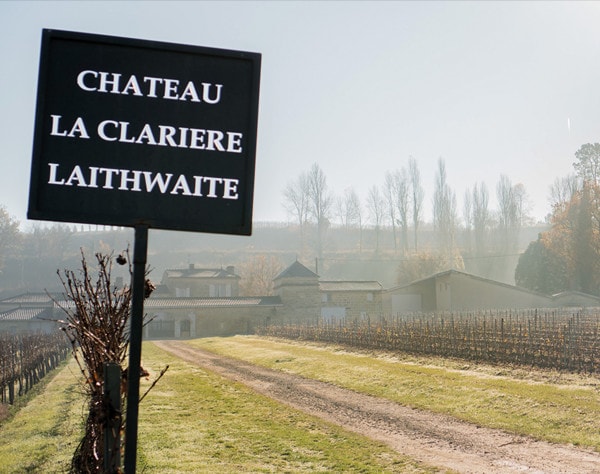
Jean-Marc and I are in total accord, both of us adamant that this is the best vintage we’ve ever made at La Clarière. We are very excited about it and about you tasting it.
It’s all come together perfectly – there were brilliant conditions throughout the growing season in 2016, our vineyards for this wine are now in top shape and we have a clearer understanding of the vines, the soils and how to adapt our techniques both outside and inside the cellar to get the most from the fruit. And, of course, we have our new winery and barrel chai.
We’ve just finished racking the wine out of barrel and think it’s tasting closest to Grand Cru Saint-Émilion (well, it is just across the road) or a luscious Pomerol.
At harvest time, the fruit quality was outstanding – healthy, uniformly ripe and very deep in colour
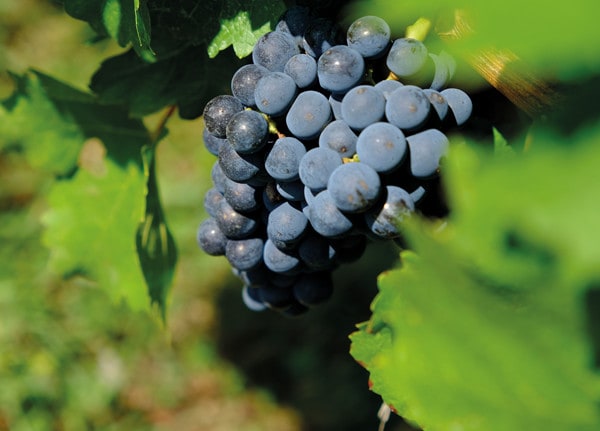
My most recent tasting note on Château La Clarière 2016:
Very deep purple crimson hue, it’s almost opaque, with a lift of ripe, dense cherry and cassis; crunchy fruit with a bite of leafiness. It’s a luscious mouthful, richly textured, almost chewy, with intense cherry, berry and blackcurrant with a layer of opulent creaminess and firm oak. And really long, with clove and vanilla on the finish. It’ll be fascinating to see how this top-vintage claret develops over the next 10 to 15 years. Definitely worth opening a bottle this year, though – just let it breathe in a jug or decanter for an hour or so beforehand.
In brief, the weather reasons why:
2016 was a real see-saw of highs and lows. The warmest and wettest winter on record since 1900, with temperatures during January and February up 2°C and rain in January alone double the usual. Doesn’t sound promising does it? And due to the warmth, budbreak was one week early. Then, before you knew it, temperatures were cooler than usual and still it rained. The stats for spring 2016 are 62% more rain and 18% fewer sunshine hours. Still doesn’t sound ideal, huh?
Despite the precipitation, across the regions flowering went well. Then June 23rd onwards, the weather changed. Remarkable. It became hot and exceptionally dry. Remember the heat spikes of over 40° in Bordeaux? There was a mere 13mm of rain from that late June date until the end of September – less than half the norm.
Then, all Bordeaux vignerons, us included, were thanking the heavens for all that excessive winter / spring rain. It sustained the vines through those dry months. Lack of rain did slow the ripening, but it wasn’t the great heat stress of 2003. And September was a gift, too – very sunny, with warm days and cold nights ... just perfect for well-balanced fruit.
The late harvest brought in small, well-ripened, healthy grapes with phenomenal colour.
I’m surprised the colour ever came out of those pickers’ purple hands! And it wasn’t just the colour – it was the thickness of the skins, the overall ripeness, the moderate alcohol levels, good acidity and the pure fruit. All that has meant a 5-star vintage.
Jean-Marc is calling it better even than 2010, as good perhaps as 1945, 1961 and 1982. That brilliant. It has ripeness and finesse and the elements to give it staying power as well.
Then on a practical level, it’s the first vintage we’ve been able to mature in our new barrel hall. The beautiful one with karma! That’s what happens when you allow your French winemaker to go on yoga holidays in exotic far-off places. He comes back with notions ... that not only is it important for people to live in a calm and welcoming, uncluttered space, but that wines benefit, too. They need to be able to relax, develop, broaden. Well, we haven’t aged an experimental batch in a noisy, messy cellar, but the calm seems to be working a treat and the 2016 is growing in stature. Once bottled and rested, it will begin to open out and show us its gorgeous flourish.
Quality was so good in 2016, there was little to discard from the sorting table
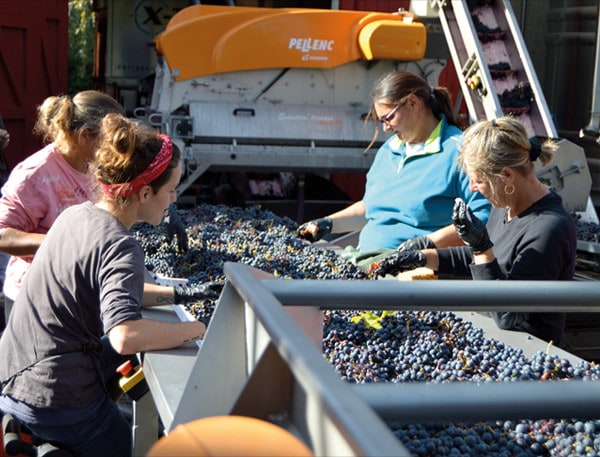
Château La Clarière – some key facts:
Our basic recipe for 2016 was 75% Merlot, 15% Cabernet Franc and 5% each of Cabernet Sauvignon and Malbec, the old Malbec taken from the terrace and also some from the relatively new plantations (proving J-M’s theory that it isn’t always the age of the vines, but the clone and its position).
However, it’s not really the percentage of each grape that counts, it’s the terroir of each parcel of fruit that makes the difference. We select very carefully each year. We have an idea of which ones will perform best and keep an eye as the vines progress. But we continue judging until each separate parcel has finished it’s time in barrel or tank.
Because that’s another thing – from the 2016 onwards, we’ve decided we don’t want to age all of the wine in oak barrels.
Through the vines to our little château winery, where all the wines are made. La Clarière then crosses the vineyards for ageing in the beautiful barrel hall
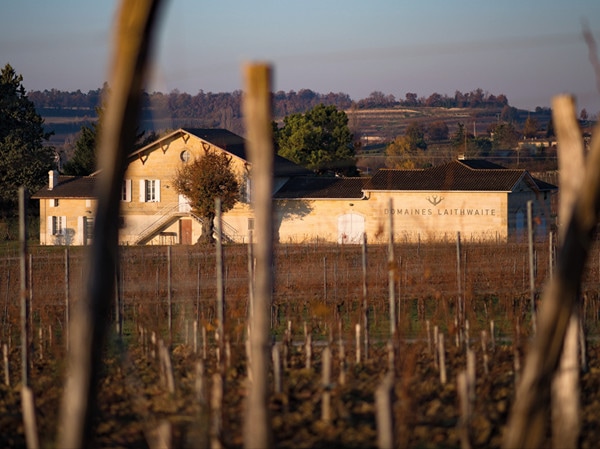
A small amount stayed in tank to give us full-on fruit and to lend the wine overall balance.
Since fermentation stopped, we’ve been keeping a watchful eye and tastebud on every parcel of wine. Each month we taste them all and check how they’re progressing, deciding whether they’re still up for inclusion in the Grand Vin. Every three months, Henry (my winemaker son) joins us for the ‘taste through’ to help us make more decisions. He also makes sure he’s there to help JMS with the blending. Each parcel is like a patient, with its progress monitored and noted on a clipboard attached to the end of the barrel. It’s that precise. So, now we’re up to final blending stage before bottling. In fact, it’s fining time, which means lots of egg whites. Yes, despite the growing march of veganism, we’ve decided to stick to using egg whites. That’s simply because it gives the finest, silkiest results. It’s gentle and natural, and we leave it 40 days for the egg whites to bring down all the tiny particles, then remove it completely.
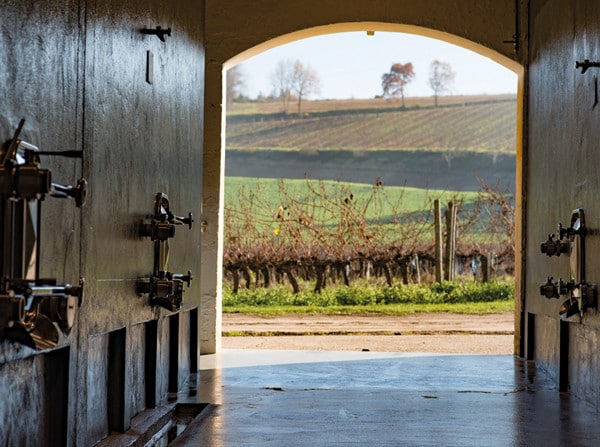
The original fermentation cellar of Colombe was fully renovated in 2015 and is where we vinify both the Colombe and La Clarière wines
Your finished wine:
So your case of glorious 2016 Château La Clarière is almost ready for shipping and will arrive with you in June. I’d let it rest a week at least, so it settles into its new home. Then try a bottle if the occasion arises. Even better, open your first bottle near Christmas.
I’d decant (a jug will do the job if no decanter’s to hand) and let it breathe for an hour. It’ll be a delicious drop for griddled steak, roast red meats – the usual suspects – and with richer game when it’s older. We reckon it has all the elements to mature gracefully for 15 years plus, until about the end of 2030. So, plenty of time to enjoy and monitor progress in equal measure.
Returning to basic principles in the cellar:
There’s still plenty going on inside the cellar and out. Just when we think the barrel hall is all beautiful, calm and finished, Jean-Marc announces that we need to build a glass wall (at the right time, so as not to disturb any of that aforementioned karma!) and enlarge it. In fact, it’s not to house more barrels, but for ‘alternative ageing’! How New Age can we get, ha ha?!
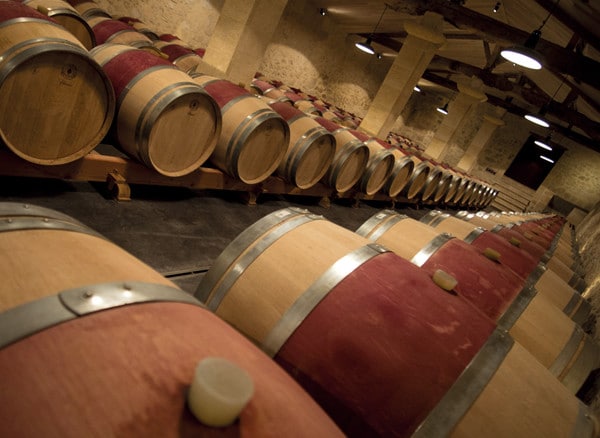
The tranquil barrel cellar, where Château La Clarière is aged in new French oak barriques
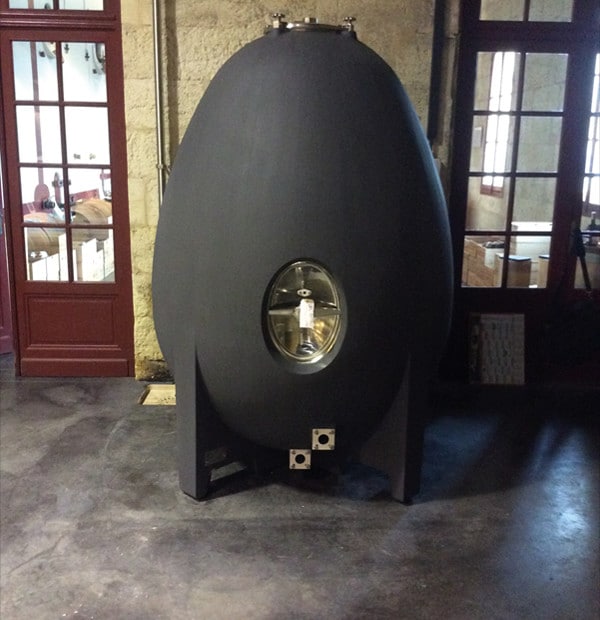
As you might imagine, to stay top of the game, you can’t just rest on your laurels (or should that be lees?!) – your team needs to continue to experiment and innovate. That’s really what the new area is for. Our ‘alternative ageing’ section will house larger barrels of various sizes, eggs and amphorae. These ‘eggs’ are, in fact, concrete egg-shaped fermenters like those we’ve been experimenting with at Le Chai. If you’re a Keyholder, you’ll know what I mean. We have a larger one and a smaller one at Le Chai.
At La Clarière, we’re planning to invest in the smaller size. Their magic is very simple, using principles that go back to basics. Due to the egg-shape of the container, the liquid inside is in slow perpetual motion. That keeps the natural solids, the lees, moving within it and results in a more richly textured and tasting wine. We’ve mostly used it for whites, but here we’ll try it on the reds and monitor the results.
The larger barrels give a lower oak to wine ratio and less micro-oxygenation, so they let the wine breathe, but don’t overwhelm the fruit with obtrusive oak flavour. We’ll be watching the results on that, too. And the final piece is the amphorae. Who’d have thought we’d be going back that far?
Well, they are a modern interpretation of amphorae – not clay, but inert concrete, closed-top containers and we won’t be burying them below ground either. It’s all very fascinating, so watch this space. It’s interesting to see how many of the big players, the Grand Cru Classé properties, are already into the egg-fermenters, amphorae etc. It’s got to be tried, to see what works best for your wine. It’s not as though all Château La Clarière will suddenly be aged in amphorae or egg-fermenters. It’s more a matter of trying out a small portion with one or other method and using it as a seasoning for the wine ... like adding salt or pepper, as JMS would say ... fine tuning.
This is one of two egg-shaped fermenters that Le Chai au Quai currently uses for their whites, that we’ll now trial at La Clarière
And besides that, in this area, we’ll also place a large, stainless steel blending tank, to do just that. To assemble the finished parcels of wine in the proportions we think best, blend, tweak, then bottle it. Essential new toys for our winemaker, JMS tells me.
In the vineyards:
Then, there’s outside. Work continues apace with our programme of pulling vineyards and replanting them. It’s a major investment, but you can only make truly great wine out of top-quality fruit. Soon, it’ll be the growers themselves who are the stars ... indeed, in some ways they already are. In Australia, we often cite the name of the growers, who’ve been tending their old vines like their father and grandfather before them. It’s even truer of the die-hard traditionalists of France, of course.
Anyway, digression aside, for us, it’s all about rebalancing the soil. That’s why we’ve been doing soil analysis throughout the vineyards. And not just of the topsoil ... we’ve been digging holes three metres deep or more and analysing samples from there, too.
Any vineyard parcel that’s performing a little under par, we’re there again, sampling and investigating what’s missing and topping up the natural levels with good organic matter. We want balance and microbial life in our soils. Healthy soils promote healthy vines that stand up to disease and that, inevitably, results in good-quality fruit. We’ve noticed the difference, too – with better leaf canopies, more photosynthesis and growth and that adds up to better grapes.
We’ve just replanted two hectares of Merlot with better clones – that’s roughly 10,000 to 12,000 plants – on the slope behind the château. It’ll be interesting to taste that in a year or two.
There’s an area that we won’t be replanting, however ... well not with vines. We’ve decided the soil is too fertile and wet in one particular area and that will, instead, be a mini orchard – of peaches, apples and cherries. Tasty.
Team talk:
We’re lucky to have Vincent Galineau as estate manager at Châteaux La Clarière et de Colombe. He keeps us all in line. In addition, we have Olivier heading the vineyard team – he has intimate knowledge of every parcel, with further guidance from Vincent who, himself, is an excellent viticulteur.
Clément d’Agostino was helping Olivier, but we’re now sending him to night school, so he can be our maître de chai at La Clarière. He’ll take responsibility of the wines resting in barrel – topping up the casks, racking the wines from one barrel to another, getting them ready for bottling and so on. But we want to teach him the ‘haute couture’ way (JMS speak!) – no short cuts for us, we favour the painstaking methods employed by the Grands Crus Classés. It’s a good move for Clément and, I believe, great for us.
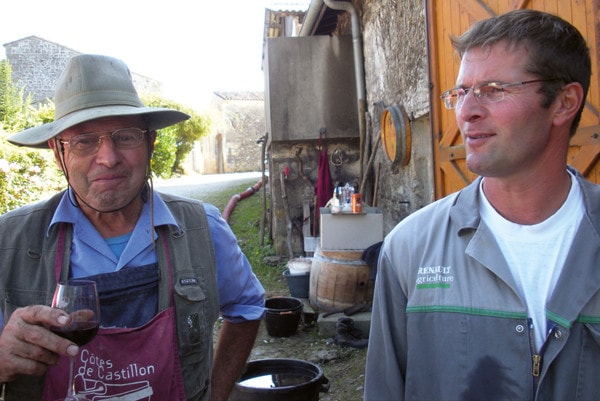
Winemaking and viticulture runs in the Galineau family – Vincent (right) pictured here with his father
Then, of course, Jean-Marc is working on the inside-the-château renovations – of creating two ensuite bedrooms for you, our Confrères, to hire, a kitchen that will be part of it, and, excitingly, work on the Great Hall. That will be where the strange compartmentalised sitting room is now. Currently it’s divided into three small areas, with the big open fireplace in a very odd spot. So that has to be moved to the far wall, another wall knocked down and, so JMS insists, the ceiling raised.
He really does want it to be a ‘Great Hall’. This will be our lovely reception area for grand occasions, or simply as a comfy, welcoming sitting room when not in formal use. I’m afraid it all takes time to get it right and we’ll let you know as soon as the rooms are ready.
Even better things for those who wait ...
With these renovations and work on a gravity-fed cellar, the tractor shed moving etc, there is too much building work to invite you over for our promised Confrère trip in 2018, unfortunately. Health & Safety wouldn’t even consider it! But it’ll be all the better in 2019. We’ll let you know more details shortly.
The official Confrère trip we’re organising will now be in 2019, but thank you for all your lovely comments from those of you that have visited already
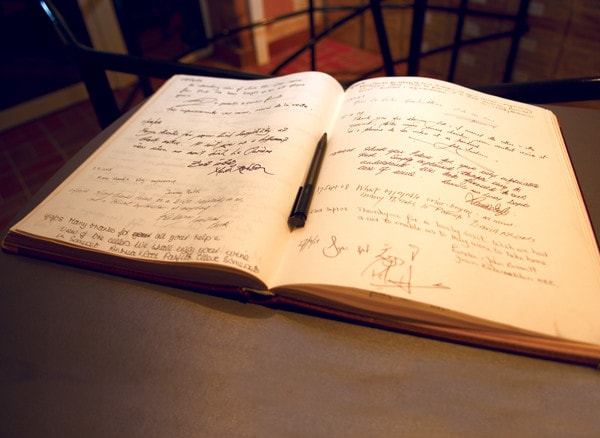
Meanwhile, I’m delighted some of you Confrères have already made it out here, under your own steam. There have been some lovely comments from you:
“The annual delight of getting a top class case of wine at a great price never wears off”
Steve Langan, Confrère
“My favourite delivery of the year, every year”
Mark Glover, Confrère
“To beat the French at what they consider their own preserve in the area of fine wines is indeed a tremendous accomplishment and that I have in some small way been part of that effort gives me enormous satisfaction”
Gwyneth Flower, Confrère

The rise and rise of Castillon:
Back in the late 1960s, I already knew, in my own naive way, that the Côtes de Castillon were better than they were given credit for. That its plateau soils were as good as any the Grands Crus of Saint-Émilion were planted on, that the dividing line was mere political expedience. I did my whole thesis on the subject as a Geography undergraduate at Durham.
Anyway, I’d like to do the ‘told you so’ bit, but ... really. Many important players of the wine world have come to the same conclusion. We’ve seen major investment in the area from top names Stéphane Derenoncourt at Domaine de l’A, the Thienpont family (of Le Pin of Pomerol fame) at L’Hêtre, Stéphan Von Neipperg at Château d’Aiguilhe, Jean-Luc Thunevin (garageiste and renowned for Valandraud) and Gérard Perse (of Premier Grand Cru Classé Saint-Emilion renown) owns three properties.
That’s all great news and I only wish old Monsieur Cassin, who first started me on this wine crusade, was still around to witness it. I’m so glad, too, we bought the additional properties in 2008, thereby increasing our vineyards in the village up to the current 30 hectares. Today, the cost of the land in Castillon is stratospheric. Five years ago, you could have bought yourself a sizeable Castillon vineyard for 20,000 Euros. Now it’s four times the price. And still prices continue to rocket.
Part of it is fuelled by the total lack of land available for purchase on the Left Bank, while anything left to purchase in Saint-Émilion and Pomerol is only affordable for a multi-millionaire. There’s considerable foreign interest – big companies who can afford the stratospheric investment.
Still, we thank our lucky stars and the eccentric dancing lady and former owner, that we saw the light and purchased the 25+ hectares that was formerly Châteaux de Colombe et du Bois. It’s such great terroir ... even though when we bought it, it was in a bit of a state. We gradually are knocking it all into shape and seeing some really exciting results.
A new addition to the La Clarière stable:
I promised you a terrific château white and I can excitedly report that it’s on its way. Château La Clarière Laithwaite Blanc will be launched this year – the delicious 2017 vintage. We’ve taken over top vineyards en fermage in a prime spot in the Entre-Deux-Mers. They’ve been well looked after by an excellent viticulteur, but for the next 10 years, they are ours. So, for the 2017 we have top-quality fruit – Sémillon and the two Sauvignons – and we’ve oak fermented the juice and barrel aged the wine. It’ll be ready for bottling in the summer we’re hoping, but it’ll be taste-tested first. What I can promise you is that it’ll be a lovely toasty, vanilla-scented white with structure, elegance and finesse. Watch this space for news.
Your wine and our next Confrère event:
I was really excited to be offering yet another Confrère event at Henry & Kaye’s Harrow & Hope Vineyard, but I’m afraid it sold out in days. We are working hard to find another date later in the year. Details will be posted on the website.
Meanwhile, enjoy your wine when it arrives next month. I’m very much hoping to see many of you at Château La Clarière soon – the château we share with you.
Yours
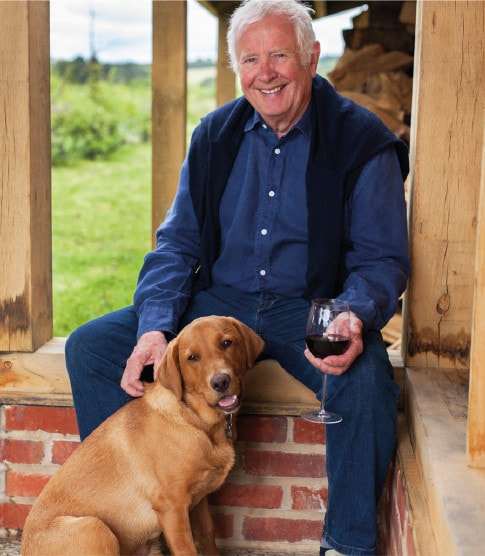
 Tony Laithwaite
Founder Confrère